
Primary School Children
Delay access to personal smart devices and teach responsible online behaviour
Last updated on 17 August 2026

Supporting Healthy Digital Habits Through Guidance and Balance
As children enter primary school, digital devices play a bigger role in their daily lives – for learning, communication, and play. At this stage, they become more independent, curious, and socially aware, while still developing important skills such as self-regulation, judgment, and critical thinking.
Parents play a key role in guiding their child to use digital devices safely, as well as setting expectations and rules and encouraging a healthy balance between screen and offline activities.
5 Tips to Support Your Child in Building Healthy Digital Habits
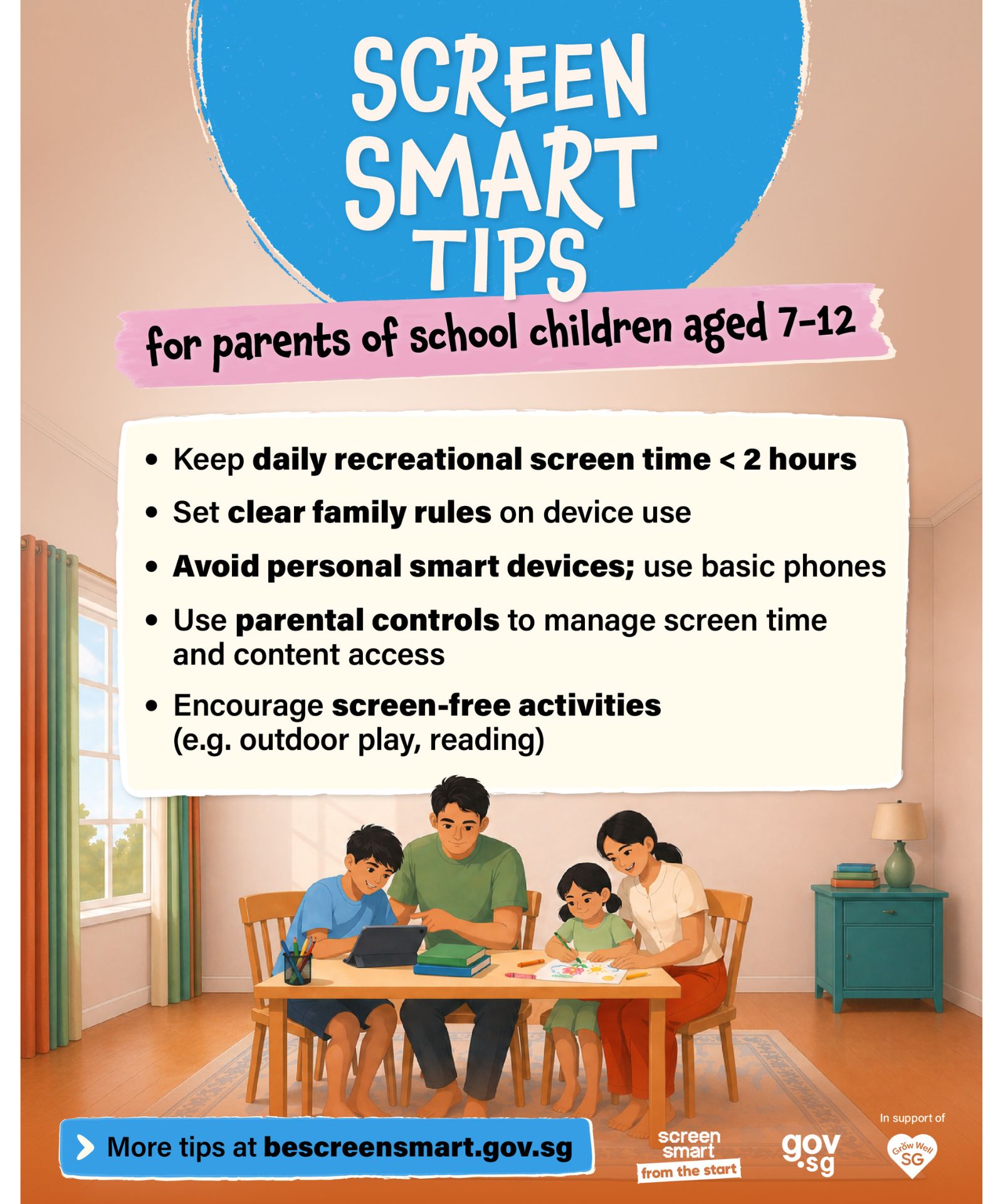
1. Limit Recreational Screen Time to Less Than 2 Hours a Day
Agree on a simple daily screen use plan or timetable (opens in new tab) with your child to set expectations.
No screens during meals (opens in new tab) and one hour before bedtime to encourage family bonding and restful sleep.
Use timers (opens in new tab) or built-in device controls (opens in new tab) to help your child manage screen time responsibly.
Encourage your child to take breaks or do offline activities between using devices.
Find out more: Balancing Your Child's Screen Use (opens in new tab)| Download Screen Use Tracker (opens in new tab)

2. Have Clear Family Rules on Devices and Online Behaviour
Clear, consistent expectations help children understand when, where, and how to use devices, and what behaviour is acceptable online. This strengthens safety, communication, and self-regulation.
Create a Family Tech Agreement (opens in new tab) or Family Screen Use Contract (opens in new tab) that outlines screen limits, acceptable apps, and online conduct.
Set family rules together with your child – this helps them feel involved and more likely to follow them.
Review and update rules as your child grows or as routines change.
Reinforce expectations positively with consistent reminders.
Regularly discuss appropriate digital behaviour (opens in new tab), including safe sharing of personal information and interacting safely online.
Find out more: How To Talk To Your Child About Online Safety (opens in new tab)
3. No Personal Smart Devices Where Possible; Use Basic Phones
Children in this age group are often not developmentally ready for personal smart device access. Restricting or delaying personal smartphones access reduces exposure to social media pressures, inappropriate content, and unrestricted internet access, supporting safer digital habits.
Encourage your child to use basic phones instead of smartphones (opens in new tab) if they need one for communication.
Keep devices in shared family spaces, and avoid unrestricted smart device use, for easier supervision.
Supervise app installation and internet access if a smart device is used.
Ask your child to seek permission before downloading apps or games and review them together.
Find out more: Guidance on Screen Use (opens in new tab)

4. Ensure Age-Appropriate Content and Use Parental Controls
Even with limits in place, children may still see inappropriate or unsafe content online. Use parental controls, check content ratings and talk with your child about what they see to protect them while supporting safe learning and play.
Check age ratings on apps, games, and websites (opens in new tab) before allowing use.
Enable parental controls (opens in new tab) on devices, games, and streaming platforms.
Discuss your child's online activities regularly (opens in new tab), and encourage them to share anything confusing or upsetting (opens in new tab).
Teach your child to recognise unsafe or misleading content (opens in new tab)and respond appropriately.
Guide your child in making responsible online decisions (opens in new tab), not just restricting access.
Encourage your child to ask for help (opens in new tab) when they encounter uncomfortable online content.
Delay access to social media services until age 13.
Find out more: Parental Controls Made Simple: A Guide To Understanding and Setting Boundaries Online (opens in new tab)
5. Encourage Alternative Habits Beyond Screens
Promote hobbies such as reading, arts, music or sports that support growth beyond screens.
Plan family screen-free time, such as board games, outdoor activities, or meals together.
Encourage playdates, team sports or community activities to strengthen offline social skills and emotional well-being.
Find out more: Ideas for Screen-Free Activities (opens in new tab)
Additional resources
To guide your child to foster healthy digital habits.
How to break the vicious screentime cycle (opens in new tab)
AI and your child: Should parent guide or guard against AI (opens in new tab)