
Young Children
Start healthy digital habits early
Last updated on 17 August 2026

Start Healthy Digital Habits Early
Young children learn most through physical play and face-to-face interaction, building language and social skills. Too much screen time can affect their development. Clear and consistent boundaries can help your child develop healthy screen habits from the very start.
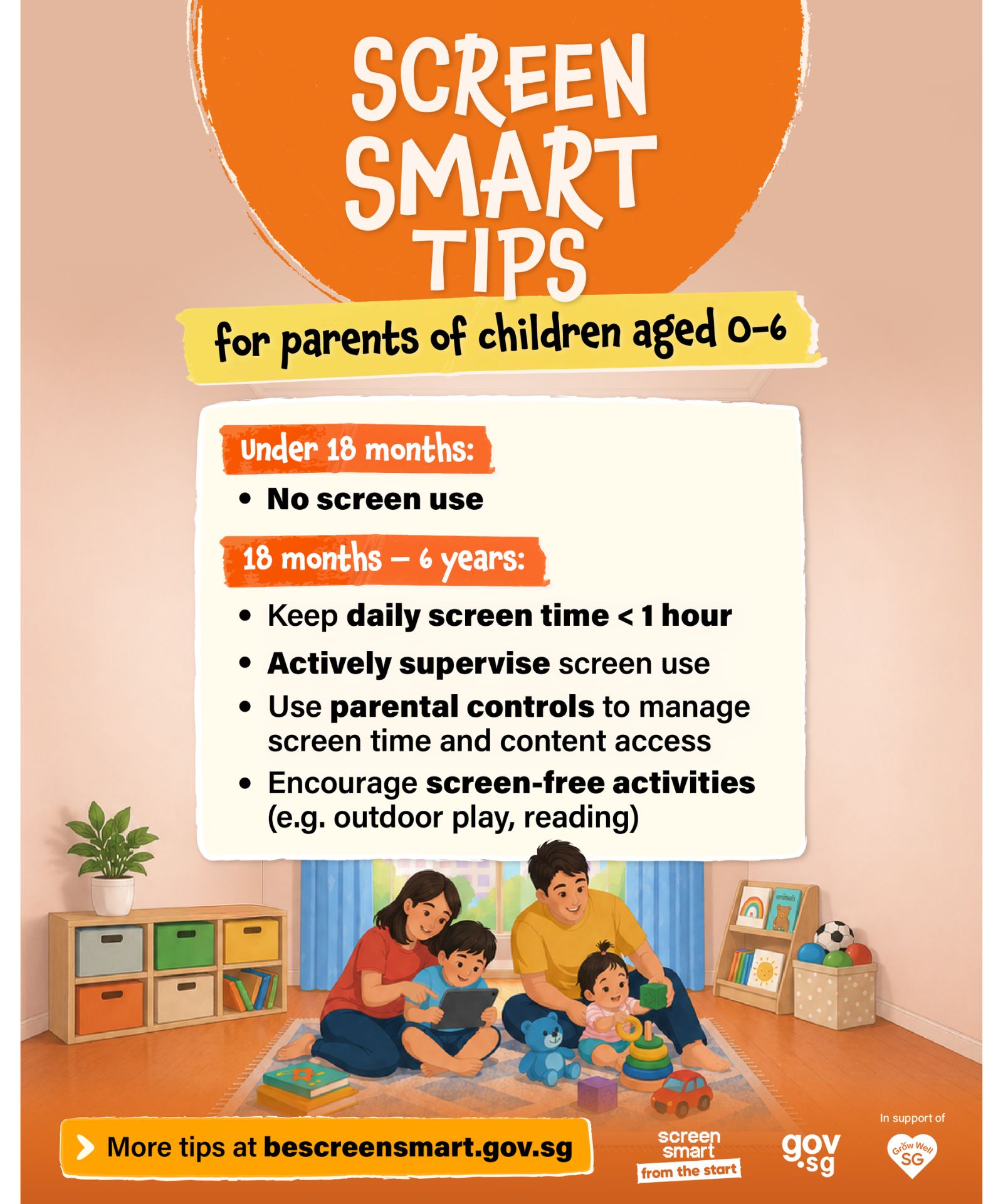
For Children Under 18 Months: No Screen Use
In the first 18 months, babies learn best through face-to-face interaction and hands-on exploration. Engaging with your tone of voice, physical touch, and eye contact are essential to their development.
Tips for Parents:
Avoid screen use entirely, except during video calls with family and friends.
Stay actively involved during video calls. Explain to your child who’s on screen and describe what is happening to help them connect digital images to real relationships.
Avoid background TV or passive screen exposure which can distract your baby and reduce quality of interaction with others.
Find out more: Ministry of Health’s screen use guidelines (opens in new tab)
For Children 18 Months to 6 Years
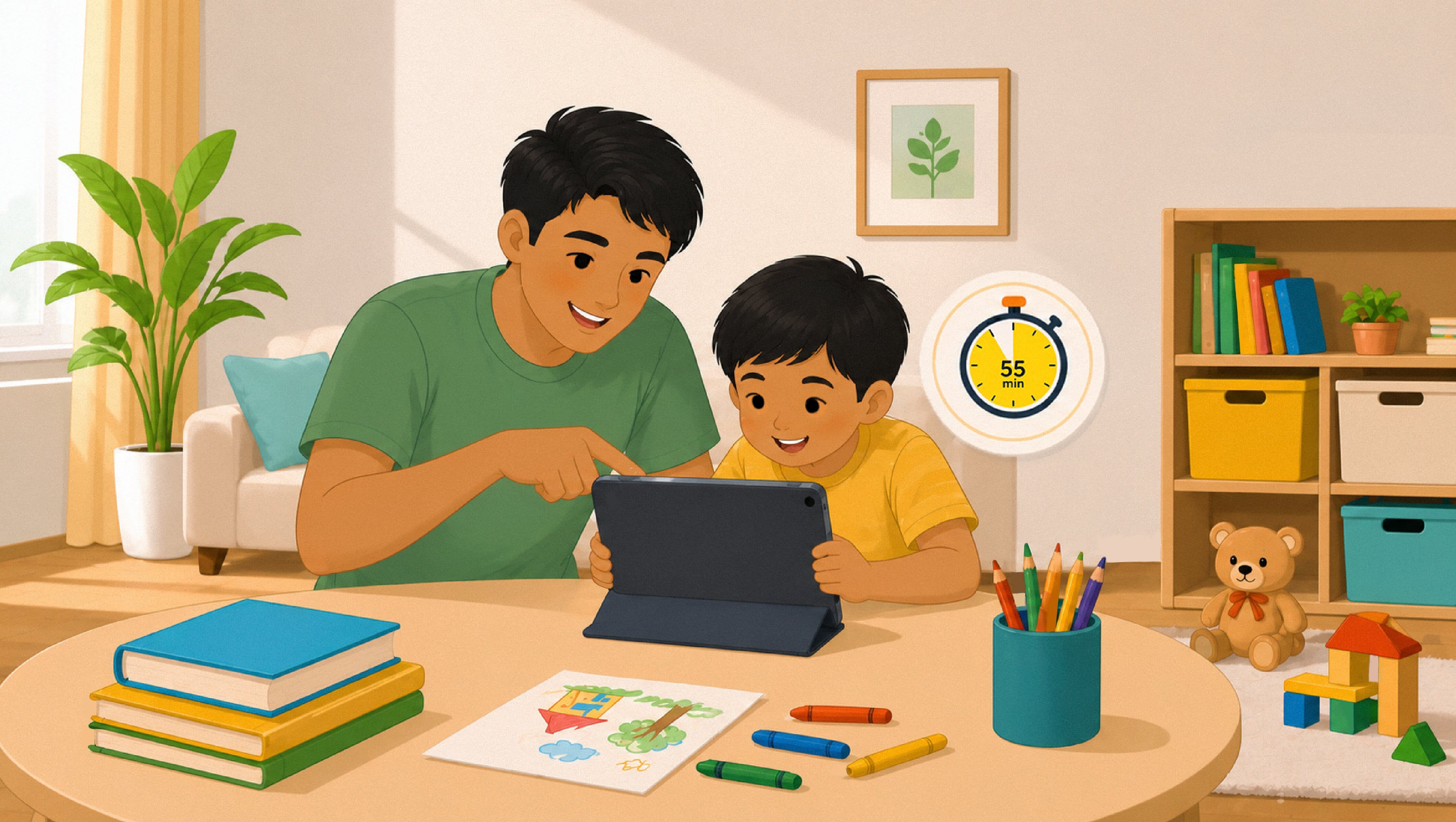
1. Less Than an Hour of Screen Use a Day
Limit screen time to less than one hour a day, following Ministry of Health’s screen use guidelines (opens in new tab).
Use timers (opens in new tab) or built-in device controls (opens in new tab) to help your child manage screen time responsibly.
No screens during meals (opens in new tab) and one hour before bedtime to support self-feeding skills, better sleep habits, and encourage family bonding.
Avoid using screens as a “Distraction”: (opens in new tab) While tempting to use screens to manage challenging moments, allowing children to learn how to manage their own emotions and boredom builds resilience. Instead, consider simple activities like puzzles, building blocks, or colouring.
Role model healthy digital habits: Children often learn by observing adults, so your own screen use can influence their screen habits too.
Find out more: Download Screen Use Tracker (opens in new tab) and Family Screen Time Rules (opens in new tab)
2. Actively Supervise Your Child’s Screen Time
Co-view and engage your child during screen time. Talk about what you are watching together, ask questions, and relate it to real life to help build understanding.
Choose educational and age-appropriate content that supports curiosity, language, and problem-solving skills. Avoid overly stimulating programmes.
Find out more: Nurturing Healthy Behaviours (opens in new tab)
3. Ensure Age-Appropriate Content and Use Parental Controls
Children at this age learn through imitation, so curate what they access to protect your child from inappropriate content online (opens in new tab).
Use Parental Controls (opens in new tab) to manage the amount of screen use and the content they are accessing.
Encourage your child to ask for help (opens in new tab) when they encounter uncomfortable content online.
Delay access to social media services until age 13.
Find out more: Parental Controls Made Simple: A Guide To Understanding and Setting Boundaries Online (opens in new tab)

4. Encourage Alternative Habits e.g. Reading, Outdoor Play
While screens offer quick entertainment, children learn best through active, real-world experiences. Habits like reading, storytelling, pretend play, outdoor exploration, and hands-on activities help your child stay active, engaged, and connected to their surroundings, while building a strong foundation for learning and development.
Find out more: Screen-free activities (opens in new tab) and download screen-free resources (opens in new tab)
Additional Resources
To guide your child to foster healthy digital habits.
4 Must-Know Tips To Curate Your Child’s Digital Experiences (opens in new tab)
Learn how these 3 parent influencers keep their kids off their devices (opens in new tab)
Childhood Health Behaviours Checklist to monitor your child’s healthy habits (opens in new tab)